Key Takeaways
- Acrylic laminate sheets usually create a more premium and modern modular look than regular laminates.
- Regular laminates can still be a practical choice for simpler or less visible furniture applications.
- Kitchens, closets, and high-end storage units are particularly well suited for high-gloss acrylic laminate sheets.
- Before you buy acrylic laminates, compare the finish with the room style, furniture visibility, and budget.
- Choosing a trusted acrylic laminate supplier helps you make a more practical and design-led decision.
A modular interior can look expensive on paper and still fall flat in real life. This usually happens when the surface finish is chosen too casually. Cabinets may be well designed, storage may be practical, and the layout may work perfectly, but if the laminate finish looks dull, outdated, or mismatched, the whole interior loses impact. That is why the choice between acrylic laminates and regular laminates matters more than many buyers realise.
At first glance, both may seem like simple decorative finishes for wardrobes, kitchen shutters, TV units, and storage panels. But once you compare their visual effect, day-to-day feel, and suitability for modern interiors, the difference becomes much clearer. If you are exploring acrylic laminate sheets for a modular kitchen, wardrobe, or premium furniture project, this guide will help you understand how they compare with regular laminates and where each option fits best.
What Are Acrylic Laminates?
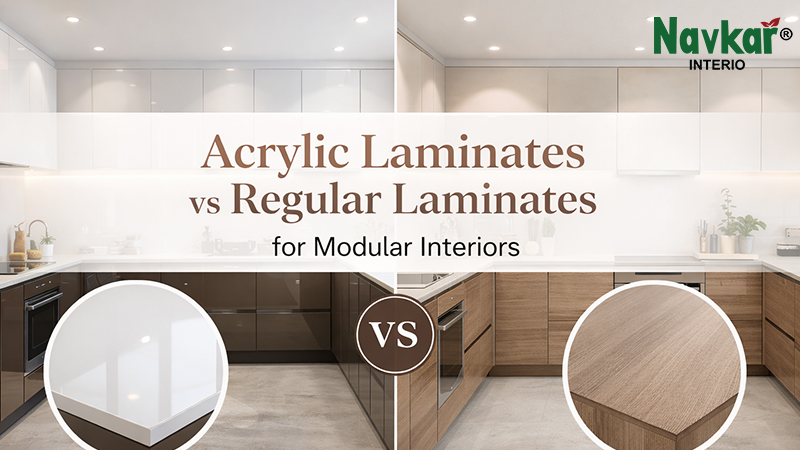
Acrylic laminates are decorative surface sheets used on modular furniture and interior panels to create a sleek, polished, and modern finish. They are especially popular in contemporary kitchens, wardrobes, and storage units because of their reflective surface and rich visual appeal.
On the Navkar Interio website, acrylic laminates are mentioned with other laminate varieties under the Laminates & Mica category. The website’s featured items and design-focused collections also include glossy acrylic laminate collections.
In practical terms, acrylic laminate sheets are often chosen when the goal is to create a cleaner, more premium-looking modular interior with a stronger surface presence.
What Are Regular Laminates?
Regular laminates are standard decorative laminate finishes widely used across modular interiors. They are a common choice for wardrobes, cabinets, kitchen units, office furniture, and wall-mounted storage because they are versatile and available in many styles.
They are often selected for projects where the focus is on functional surface finishing across larger areas. Compared to acrylic laminates, regular laminates usually create a more understated look, which may work well in interiors that do not need a glossy or high-contrast finish.
This is where the comparison becomes important. Both materials serve a decorative and practical purpose, but they create very different visual results in modular spaces.
Acrylic Laminates vs Regular Laminates: The Main Difference
The biggest difference is not just material category. It is the kind of interior expression each one creates.
- Acrylic Laminates Create a More Premium Visual Impact: Acrylic laminates are often preferred for their rich, polished, and more design-forward appearance. They can make shutters, wardrobes, and modular units look sharper and more contemporary.
- Regular Laminates Feel More Standard and Flexible: Regular laminates are usually easier to place across many types of interiors because they come in a broad range of patterns and finishes. They are often chosen when the look needs to be practical, balanced, and less visually bold.
- What This Means for Buyers: If your modular interior is meant to look modern, sleek, and premium, acrylic laminates often feel like the stronger design choice. If the project needs a simpler, more neutral surface finish, regular laminates may be enough.
That is the real difference. It is not only about material. It is about the final interior effect.
Where Acrylic Laminates Work Better in Modular Interiors
Acrylic laminates are usually a better fit in spaces where the surface itself needs to stand out.
They are commonly used in:
- Modular kitchen shutters
- Wardrobe exteriors
- TV unit panels
- Bedroom storage units
- Premium display cabinets
- Modern office storage furniture
This is especially true when the project calls for high gloss acrylic laminate sheets that give furniture a cleaner and more elevated look. In many modern homes, buyers choose acrylic finishes because flat-looking cabinet shutters can make even a good design feel ordinary.
For example, a modular kitchen with simple cabinet lines can look far more premium when acrylic laminates are used on visible shutters instead of a more basic finish.
Where Regular Laminates May Be a Better Choice
Regular laminates can still be the right choice in many projects. Not every modular interior needs a glossy premium surface.
They may work better in:
- Utility storage units
- Large cabinet runs where a softer finish is preferred
- Office furniture that needs a restrained appearance
- Projects where visual simplicity matters more than surface shine
- Interiors with a more muted or practical design direction
This does not make them inferior. It simply means they suit a different kind of requirement. If your goal is subtle coordination rather than a standout finish, regular laminates can be a sensible option.
Which One Is Better for Modern Interiors?
For many modular interiors, acrylic laminates often feel more aligned with modern design language. The reason is simple. Modern interiors usually favour cleaner surfaces, sharper visual lines, and a more refined finish. Acrylic laminates support that look naturally.
Regular laminates can still look modern, but they usually depend more on colour choice, pattern selection, and overall styling. Acrylic laminates, especially high gloss acrylic laminate sheets, tend to create that premium contemporary feel more quickly.
That said, “better” depends on the space.
- For modern kitchens, acrylic laminates often look stronger
- For premium wardrobes, acrylic laminates usually feel more upscale
- For basic utility interiors, regular laminates may be more practical
- For furniture that should look quiet and understated, regular laminates may fit better
So the better option depends on whether you want the surface to quietly support the interior or actively lift it.
How to Choose Between Acrylic Laminates and Regular Laminates
A lot of buyers make this decision too fast. They see one attractive sample and decide on the spot. That is risky because laminates do not exist in isolation. They are part of the full furniture and interior composition.
Acrylic Laminates vs Regular Laminates: A Practical Example
Imagine two wardrobe designs with the same layout, same handles, and same internal storage. One uses regular laminate, and the other uses acrylic laminate on the external shutters. Even with the same construction, the second wardrobe will usually feel more polished and premium because the finish changes how the furniture interacts with light and the surrounding room style.
Now think about a utility cabinet inside a less visible area. In that case, using acrylic on every surface may not add meaningful value. A regular laminate may do the job perfectly well. This is the kind of practical judgement buyers need. Not every space needs the same finish intensity.
What to Check Before You Buy Acrylic Laminates
Before you buy acrylic laminates, check these points carefully:
- Whether the laminate is for highly visible modular surfaces
- Whether the room style supports a glossy premium finish
- Whether the colour works with existing décor
- Whether the budget aligns with the desired look
- Whether you are buying from a trusted acrylic laminate supplier
A surface finish should not be selected like a loose accessory. It plays a major role in how modular interiors are experienced every day.
Why Choose Us
At Navkar Interio, we understand that laminate selection is not just about colour or finish on a sample board. It is about how the final modular interior will look, feel, and come together in real use. As an experienced acrylic laminate supplier, we offer acrylic laminate options as part of our wider decorative surface range, helping customers explore finish choices that suit kitchens, wardrobes, storage units, and other modular interior applications. Our website features acrylic laminate categories and glossy acrylic collections alongside other laminate and decorative surface solutions, making it easier for buyers, designers, and project planners to compare styles within a broader interior context. Whether you want to buy acrylic laminates for a sleek kitchen or compare acrylic laminates price with other finish options, we focus on helping you choose with more clarity.
Conclusion
Acrylic laminates and regular laminates both have a place in modular interiors, but they do not create the same result. Acrylic laminates are usually the stronger choice when the goal is a sleek, polished, and more premium-looking surface, especially for kitchens, wardrobes, and visible furniture fronts. Regular laminates often work well where the finish needs to stay simple, practical, and visually softer. The right decision depends on the space, the role of the furniture, and the kind of interior mood you want to create. If you are comparing finishes, styles, and acrylic laminates price, it helps to look beyond the sample and think about the final room effect. For buyers who want a sharper modern look, acrylic laminate sheets are often the more impactful choice.
Planning a modular interior upgrade? Contact Navkar Interio at +91-901-678-7132 or email info@navkarplywood.in for expert guidance on acrylic laminate selections.
FAQs
What is the difference between acrylic laminates and regular laminates?
Acrylic laminates usually offer a more polished and modern-looking finish, while regular laminates often give a simpler and more standard surface appearance. The choice depends on the visual result you want.
Are acrylic laminates good for modular kitchens?
Yes, they are often a popular choice for modular kitchens because they can make shutters look sleeker and more premium. They are especially useful in modern kitchen designs.
Where are acrylic laminate sheets commonly used?
They are commonly used on wardrobes, kitchen shutters, TV units, storage cabinets, and other modular furniture surfaces where appearance matters a lot.
Should I buy acrylic laminates for every cabinet surface?
Not always. Acrylic laminates are often most useful on visible exterior surfaces, while less visible or utility areas may not need the same finish treatment.
How do I choose the right acrylic laminate supplier?
Look for a supplier that offers relevant laminate options, practical finish guidance, and a product range that fits modular interior needs. This makes the comparison process much easier.